What the Past Won't Let Go Of: Using Backstory as a Ghost Instead of a Manual

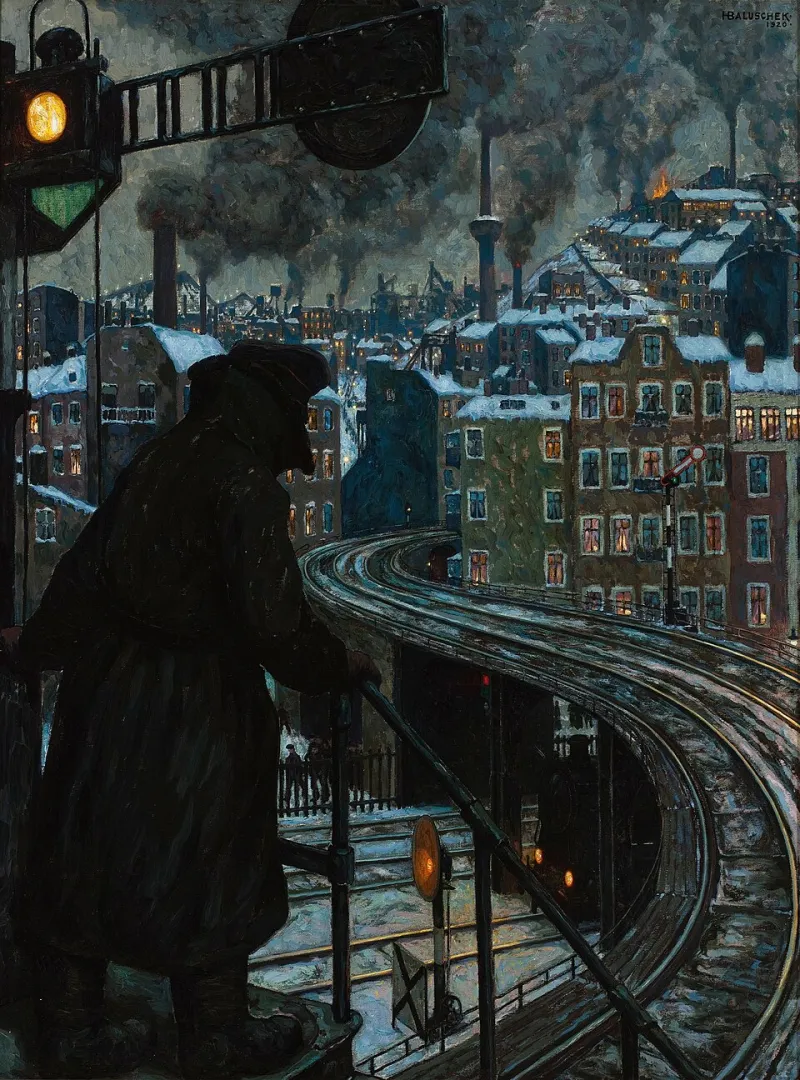
Photo: Wilfredor , CC0, via Wikimedia Commons
There's a scene in a lot of first drafts that goes something like this: a character does something confusing or extreme, and then—almost immediately—another character asks why, and the first character explains their entire childhood in two paragraphs. Problem solved. Motivation established. Reader informed.
Except the reader isn't informed. They're bored. And the character just got a little smaller.
Backstory, when it's used as an explanation, becomes a crutch. And the thing about crutches is that they signal weakness. When a writer leans on backstory to justify behavior, what they're really saying is: I don't trust you to understand this character without me spelling it out. That's a rough message to send.
The writers who do this well—the ones whose characters feel like real people walking around with real weight—treat the past completely differently. They treat it like a ghost.
Ghosts Don't Announce Themselves
Here's what a ghost does: it shows up at inconvenient moments, in fragmented and often confusing ways, and it refuses to be fully explained. You feel it before you understand it. Sometimes you never fully understand it, and that's part of what makes it unsettling.
That's exactly how the past works on real people. Nobody sits down and narrates their trauma in clean, linear sentences. What actually happens is messier and more interesting—a flinch when someone raises their voice, a joke made at exactly the wrong moment, an irrational refusal to ask for help, a pattern of behavior that the person themselves doesn't have language for yet.
When you write a character whose past haunts them rather than explains them, you're doing something closer to how memory and experience actually function. And your readers will feel that authenticity even if they can't name why.
The Lie Is the Tell
One of the most powerful tools in a writer's kit is the lie a character tells themselves. Not the lie they tell other characters—that's useful too—but the internal story they've constructed about who they are and why they do what they do.
A character who grew up with an emotionally unavailable parent might tell themselves they prefer being alone. They might genuinely believe it. But watch what happens when someone starts to get close: the sabotage, the picking fights over nothing, the sudden need to leave town for a week. The lie reveals itself not through confession but through behavior.
You, the writer, know the backstory. The character might know pieces of it. But the reader gets to watch the gap between what the character believes about themselves and what's actually true. That gap is where the story lives.
This is infinitely more interesting than a character who turns to their best friend and says, "You know, ever since my dad left when I was nine, I've had trouble trusting people." That's therapy-speak, and it flattens a human being into a case study.
What They Won't Talk About
Pay close attention to the subjects your characters avoid. Avoidance is one of the most revealing things a human being can do, and it's criminally underused in fiction.
If your character has a complicated relationship with their older brother, don't write a scene where they explain it. Write a scene where someone mentions having a sibling, and your character changes the subject so fast it's almost rude. Write the moment where they get a text notification and their whole posture shifts before they pocket the phone without looking at it. Write the toast at a family event where they say something technically complimentary but hollow—and notice who in the room catches it.
The reader will catch it too. And they'll start asking questions. That curiosity is engagement, and engagement is exactly what you want.
The past doesn't need to be explained. It needs to be felt. And we feel things through texture and implication, not through exposition.
Reflexive Behavior Is Your Best Friend
Here's a practical exercise: think about a formative experience your character had—something that shaped them before they had the emotional vocabulary to process it. Now ask yourself, what reflex did that experience create?
Not a belief. Not a philosophy. A reflex.
Maybe they grew up in a house where conflict meant someone was going to leave, so now they apologize for things that aren't their fault before anyone even gets upset. Maybe they were the responsible one in a chaotic household, so they compulsively over-prepare for everything—and quietly fall apart when something is outside their control. Maybe they learned early that being funny was the fastest way to defuse danger, so now they crack jokes at funerals and can't stop themselves even when they know it's wrong.
Reflexes happen before thought. That's what makes them so revealing. A character who thinks about their past and then acts accordingly feels calculated. A character who acts from a reflex they barely understand—and sometimes can't even see—feels human.
The Danger of the Backstory Dump
There's a particular failure mode that shows up a lot in amateur writing, and it usually lives in chapter two. The story opens strong—there's conflict, there's tension, there's a character doing something that makes you want to know more. And then the writer, feeling the need to justify all of that, pumps the brakes and delivers several pages of history.
The momentum dies. The mystery evaporates. The reader, who was leaning forward, sits back.
Backstory dumps are almost always a sign that the writer is more comfortable explaining their character than trusting their character to exist on the page. The fix isn't to cut the backstory—it's to scatter it. Let it surface in moments of stress. Let it appear sideways in the things characters say when they're not thinking carefully. Let it live in the details of someone's apartment, the way they hold a glass, the routes they take to avoid certain streets.
Feed the reader crumbs, not a meal.
Putting It Together
The goal is to write a character whose past is present without being announced. The reader should feel the weight of history without being handed a summary of it. They should be able to sense the shape of the wound before they see the scar.
That means trusting your readers more than you might be comfortable with. It means being willing to leave things incomplete and let the audience do interpretive work. It means understanding that mystery isn't a problem to be solved—it's an invitation to stay.
When a character's past haunts them, the story becomes something the reader participates in. They're not just receiving information; they're assembling a person. And there's nothing quite like the feeling of a fictional human being clicking into place—of suddenly understanding why someone does what they do, without ever being told.
That's the difference between backstory as a manual and backstory as a ghost. One tells you what to think. The other makes you feel something you can't quite explain.
And the things we can't quite explain are the ones we remember longest.