Stop Explaining Everything: What Great Storytellers Know About Letting Readers Do the Work
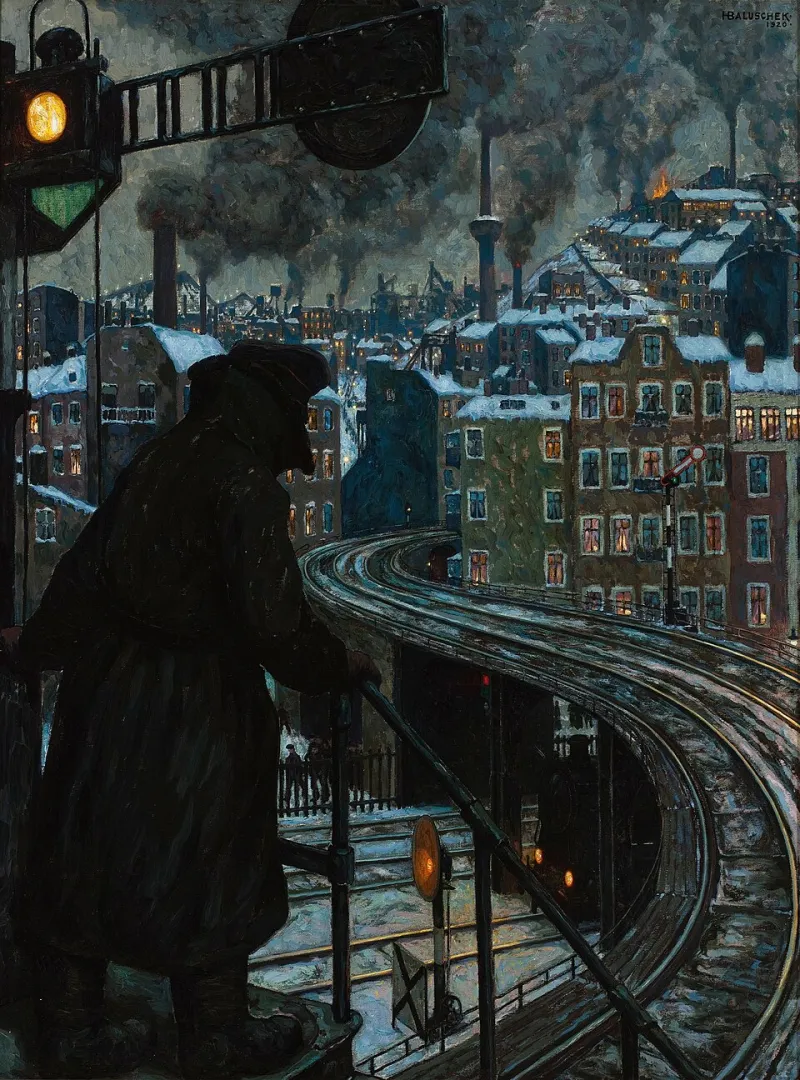
Photo: Hans Baluschek, Public domain, via Wikimedia Commons
Here's a scene that might feel familiar. You've been working on your story for months. You know everything — the history, the rules, the backstory, the why behind every single thing that happens. And because you know all of it, you assume your reader needs all of it too. So you give it to them. Right up front. All of it.
And then you wonder why the pacing feels like a car stuck in mud.
This is one of the most common traps writers fall into, and it makes total sense. You built this world. You lived in it. The idea that someone might not immediately understand it feels almost offensive. So you explain. And explain. And then explain a little more just to be safe.
But here's the thing — your audience is smarter than you're giving them credit for.
The Myth of the Confused Reader
There's this persistent fear among writers that readers will bounce the moment they don't fully understand something. So the instinct is to preemptively answer every question before it even gets asked. What is this place? Here's three paragraphs. Who is this person? Here's their entire childhood. Why does this matter? Let me tell you exactly why.
The problem is that confusion and curiosity are not the same thing, and great storytelling lives in the space between them.
When a reader doesn't know something yet, there are two possible outcomes. One: they're frustrated because the story hasn't given them enough to care. Two: they're hooked because the story has given them just enough to want more. The difference between those two outcomes isn't about how much information you provide — it's about whether the reader is emotionally invested before the gap appears.
Think about the opening of No Country for Old Men — both the novel and the film. You're dropped into a world with its own rhythms and its own moral logic, and nobody stops to explain the rules to you. You figure it out. And because you're doing the work of figuring it out, you're engaged in a way that a neat little explanation could never achieve.
Front-Loading Is a Confidence Problem
Let's be honest about what over-explanation usually is at its core: a lack of trust. Not in your reader — in yourself. When writers dump context early, it's often because they're not confident the story itself will be compelling enough to carry the audience through the uncertainty.
That's worth sitting with for a second.
If you feel the need to explain everything upfront, ask yourself whether you're actually worried the reader won't understand — or whether you're worried the story won't hold up without a safety net of context. Those are very different problems with very different solutions.
The fix for the first problem is craft: learning how to embed information into action and dialogue. The fix for the second problem is deeper revision: making sure the story itself is doing enough work.
Weaving Information Into the Story's Fabric
So if you're not front-loading, how do you get essential information across? The answer is that you hide it inside things that are already happening.
Put it in conflict. Two characters arguing about a decision reveals backstory without announcing it. "You know why I can't go back there" tells us everything we need to know — something happened, it was significant, and it still affects behavior — without a single flashback or explanatory paragraph.
Put it in behavior. A character who checks the locks three times before bed is telling you something. A character who flinches when someone raises their voice is telling you something. You don't need to explain the trauma. The behavior is the explanation, and it's a more powerful one.
Put it in what characters don't say. Subtext is one of the most underused tools in storytelling. When two people talk around something rather than about it, the reader fills in the gap — and what they fill it in with is almost always more resonant than whatever you would have written explicitly.
Put it in small, specific details. A worn photograph. A scar that nobody mentions. A name someone uses that's slightly different from what everyone else calls them. These details do the work of paragraphs of exposition without stopping the story to deliver a lecture.
Where Mystery Works and Where It Doesn't
None of this means you should withhold everything and leave your reader perpetually in the dark. There's a balance, and finding it is one of the core skills of storytelling.
Generally speaking, readers can tolerate — and actually enjoy — mystery around context and backstory. They want to discover who these people are and how this world works. They're fine not knowing yet.
What they can't tolerate is confusion about what's happening right now. If the present-tense action of your scene is unclear, no amount of rich backstory will save you. Readers will bail. The rule of thumb is something like: make the immediate moment crystal clear, and let everything else reveal itself over time.
The stakes of a scene don't require a full history lesson to land. A character desperately needs something — that's a stake. We feel it in the urgency of the moment. We can learn later why they need it so badly. In fact, learning later makes the earlier scene retroactively richer, which is one of the genuine pleasures of well-constructed storytelling.
The Reread Test
Here's a practical technique worth stealing. Once you've finished a draft, go back to your opening chapters and ask yourself: what would happen if I deleted this explanation entirely? What if I cut this paragraph of context, this sentence of clarification, this beat where a character conveniently explains the world to another character who probably already knows it?
More often than not, you'll find the scene doesn't collapse. It actually breathes better. The reader would have gotten there on their own, and the journey of getting there would have been more engaging than being handed the answer.
The information you think is load-bearing often isn't. And the information that genuinely is load-bearing? You'll find a way to work it in organically, because the story actually needs it — not because you're afraid without it.
Trust is a two-way street in storytelling. Your reader trusts you to take them somewhere worth going. Your job is to trust them enough to let them walk there.