What Characters Do When Nobody's Watching: The Power of the Quiet Moment

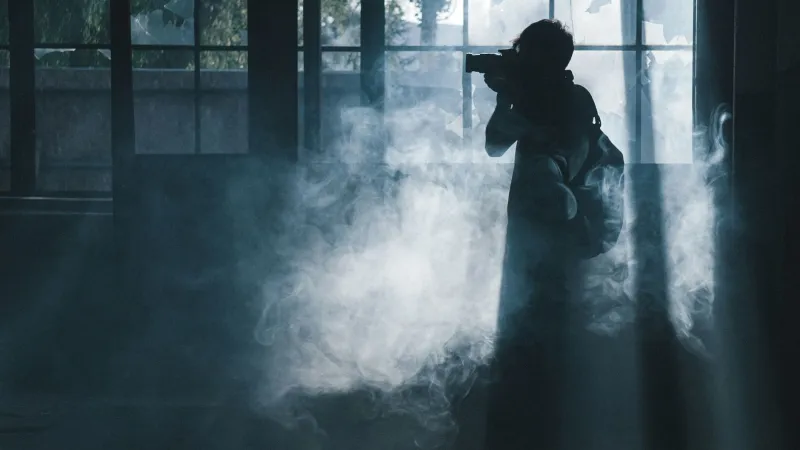
Photo by Photo by JD Mason on Unsplash on Unsplash
Here's a scene I keep thinking about. In The Sopranos, Tony Soprano is alone in his backyard, feeding the ducks in his pool. No dialogue. No action. Just a large, violent man watching birds. And in that single quiet beat, we understand something about him that three seasons of therapy scenes only partially captured — that underneath all the brutality, there's a person desperately afraid of losing things he loves.
That moment cost almost nothing to write. But it landed harder than almost anything else in the series.
Most writers, especially early in their craft, treat silence like dead air. Something to fill. But silence in storytelling isn't absence — it's presence. It's the moment where a character stops performing and we catch a glimpse of who they actually are.
The Performance vs. The Person
Here's the thing about characters in active scenes: they're usually doing something intentional. Arguing a point. Charming someone. Defending themselves. Even in conflict, characters are often playing a role — presenting a version of themselves to other people in the story.
But quiet moments strip that away.
When a character is alone, or thinks no one is watching, or gets caught in a pause they didn't plan for — that's when the mask slips. And that's when readers or viewers get access to the interior life that all the dialogue in the world can't quite reach.
Think about what a character does in the ten minutes after they hang up a difficult phone call. Do they pour a drink? Sit very still? Check their phone immediately, like they're hoping for a distraction? Each of those choices tells us something different. None of them require a single line of dialogue.
Inaction as Character Revelation
One of the most powerful things a character can do is not do something.
In No Country for Old Men — both the Cormac McCarthy novel and the Coen Brothers film — Sheriff Bell is a man who doesn't go through the door. When he arrives at the motel room where the violence has already happened, he stands outside. He chooses not to enter. And that single moment of inaction tells us everything we need to know about where this man is in his life — that he's exhausted, that the world has outpaced him, that his particular brand of decency no longer has a place in the story he's living.
Anton Chigurh never would have stood outside that door. That contrast, communicated almost entirely through absence of action, defines both characters more sharply than any confrontation between them could.
When you're building characters, ask yourself: what would my character not do in this moment, and why? That restraint — written with intention — can be electric.
The Micro-Pause in Dialogue
Silence doesn't always mean a full scene of someone staring out a window. Sometimes it's smaller than that. A beat between lines. A question that doesn't get answered right away. A character who starts to say something and then doesn't.
In screenplay format, writers often use the parenthetical (beat) to signal this, and when it's used well, it does real work. That half-second of hesitation before a character says "I'm fine" tells us they're not fine. The pause before someone says "I love you back" tells us the relationship has a fault line running through it.
In prose, you can build this through sentence rhythm. Short sentences create speed and certainty. A longer sentence that trails off, or that pivots mid-thought, mimics the way real human cognition actually works — nonlinear, interrupted, uncertain.
Write the pause. Don't skip it.
What Silence Reveals That Dialogue Can't
Dialogue is inherently social. Even internal monologue, in a lot of fiction, feels like a character talking to themselves — which is still a kind of performance. But a character's physical behavior in a quiet moment, the small unconscious choices they make, those bypass the rational mind entirely.
Consider: a character who always straightens things when they're nervous. A character who laughs at the wrong moment because they don't know what else to do with discomfort. A character who goes very still when they're angry, rather than loud.
These tics and habits, revealed in the quiet spaces between plot events, do something that exposition simply cannot — they make a character feel inhabited. Like there's a real person living inside them who existed before page one and will keep existing after the last page.
Elizabeth Strout does this brilliantly in Olive Kitteridge. Olive rarely says exactly what she means. But watch what she does with her hands. Watch where she looks. Watch what she doesn't say when someone is clearly waiting for comfort. The silence around her dialogue does as much work as the dialogue itself.
Practical Ways to Use This in Your Own Work
If you want to start using quiet moments more intentionally, here are a few places to look in your drafts:
After major emotional events. What does your character do in the hour after something significant happens? Don't skip straight to the next plot point. Let them exist in the aftermath for a moment.
In transitions. The space between scenes is often where character lives. What is your protagonist doing while they're waiting? While they're driving? While they're trying to fall asleep?
In group scenes where one character goes quiet. If you have three characters talking and one of them stops participating, the reader will immediately want to know why. Use that.
In moments of decision. Before a character commits to a choice, give them a beat. Let them sit with it. That hesitation — or the conspicuous lack of it — tells us who they are.
The Courage to Leave Space
There's a reason a lot of writers avoid this. Silence on the page feels risky. It can feel like nothing is happening. And in a culture that often rewards constant stimulation, trusting a quiet moment takes nerve.
But readers are smarter than we give them credit for. They feel the weight of a pause. They notice when a character doesn't say the thing they were supposed to say. They sit with a character who is just being for a moment, and they fill that space with their own understanding, their own projection, their own emotional investment.
That's not a gap in your story. That's the reader becoming a collaborator.
The best storytelling I've encountered — in books, film, television, anywhere — always makes room for this. It trusts that what's left out can hit just as hard as what's put in. Sometimes harder.
So the next time you're drafting a scene and you feel the urge to fill every moment with dialogue or action, try stopping. Let your character just be somewhere, doing something small, for a sentence or two. See what it reveals.
You might be surprised how loud silence can get.